Summary
The material acts as a catalyst for the oxygen reduction reaction in zinc‑air batteries, achieving about 96 % of platinum’s performance.
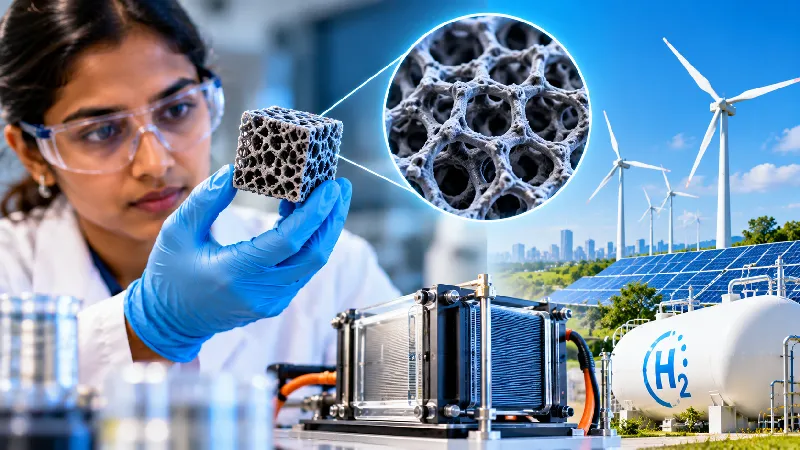
It is composed of abundant elements—carbon, sulfur, nitrogen, and hydrogen—and forms an ultra‑porous honeycomb‑like network.
Continuous laboratory operation for 120 hours showed high stability without degradation.
Replacing platinum with this inexpensive material could make zinc‑air batteries, fuel cells, and other renewable‑energy storage systems more affordable.
Computer modelling revealed that the material’s molecular design creates favorable sites for oxygen molecules to attach and react.
The discovery demonstrates how molecular design and simulations can bring earth‑abundant materials close to the performance of precious metals.