← Back
Article image
πŸ“° News ⏱ 2 min
πŸ”‘

Key Points

5 points
1

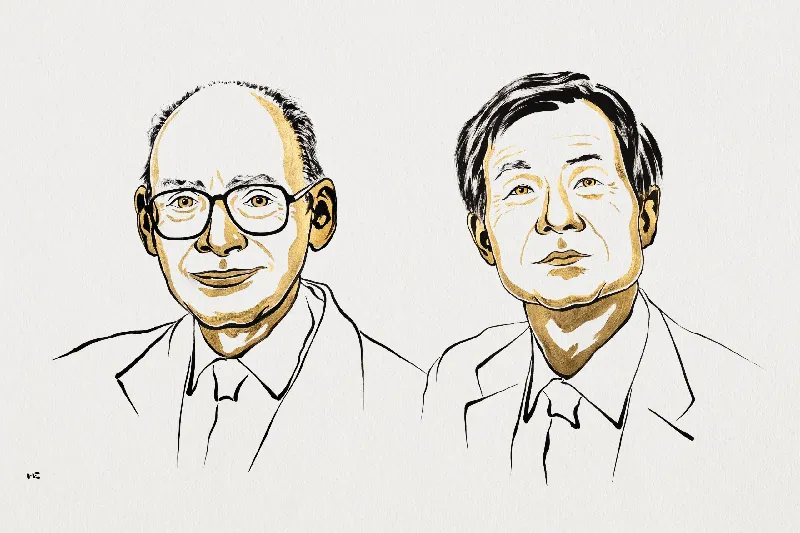
Henri Kagan and Kenso Soai won the 2026 Nobel Prize in Chemistry.

2

The prize recognized their work on non‑linear effects and autocatalysis in asymmetric organic synthesis.

3

Their studies involve chiral molecules, which have left‑handed and right‑handed versions.

4

The discovery helps chemists create substances more efficiently, especially medicines.

5

The ceremony in Stockholm includes medals, a cash award, and a meeting with the Swedish king.

πŸ“–

Summary

Their research focuses on chiral molecules, which exist in left‑handed and right‑handed forms that are mirror images of each other.

They showed that a small amount of a product can accelerate its own formation, a principle useful for making medicines and other chemicals.

The award ceremony will take place in Stockholm, Sweden, where the laureates will receive medals, a cash prize, and meet King Carl XVI Gustaf.

πŸ“˜

New Words to Learn

7 words
Nobel Prize
A prestigious international award given for outstanding contributions in fields like science, literature, and peace.
Chemistry
The branch of science that studies the composition, structure, and changes of matter.
Molecule
A group of atoms bonded together, forming the smallest unit of a chemical compound.
Chiral
Describing objects that are mirror images of each other, like left and right hands; molecules can have this property.
Non‑linear effects
Situations where a small cause leads to a disproportionately large effect.
Autocatalysis
A process where a product of a reaction speeds up its own formation.
Asymmetric organic synthesis
Making chemicals where the left‑handed and right‑handed versions are produced in different amounts, often important for medicines.
πŸ”— Read Full Article β†’

Want to learn even more? Click here to read the full story!

πŸ”Š Reading Article
Kid-friendly voice
πŸ†

New Badge Unlocked!

Badge Name
Badge description