← Back
Article image
πŸ“° News ⏱ 2 min
πŸ”‘

Key Points

8 points
1

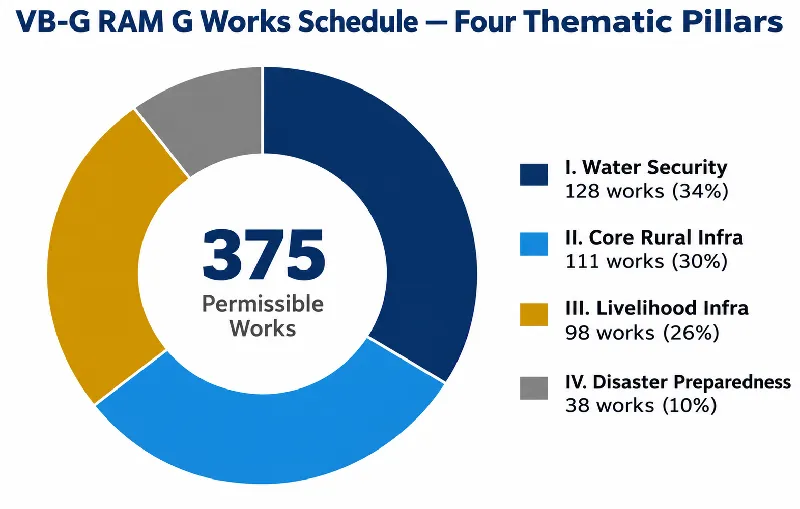
375 permissible works were added, raising the total by 41 % compared with the earlier scheme.

2

Four broad areas: Water Security (128 works), Core Rural Infrastructure (111 works), Livelihood‑Related Infrastructure (98 works), Disaster Preparedness (38 works).

3

Water security includes check dams, gully plugs, underground dykes, recharge shafts, injection wells, river rejuvenation, drip irrigation, sprinkler systems, rainwater harvesting, ice stupas, and artificial glaciers.

4

Core infrastructure covers solar street lighting, waste‑to‑wealth recycling plants, greywater treatment, rural libraries, veterinary and health centres, common service centres, youth centres, extra classrooms, and water‑supply maintenance.

5

Livelihood projects feature agro‑processing units, cold storage, mini flour mills, market yards, dairy and mushroom facilities, sericulture sheds, poly‑houses, aquaculture structures, and self‑help‑group centres.

6

Disaster preparedness adds flood relief shelters, retaining walls, embankment strengthening, flood protection works, post‑disaster road repair, forest‑fire management lines, and fuel‑buffer zones.

7

Special focus is given to farmers, vulnerable households, women, and rural youth, with works for agriculture, housing, sanitation, energy, and skill development.

8

Plans will be selected by Gram Panchayat (village council) and approved by Gram Sabha (village assembly), with digital tracking through the Viksit Bharat National Rural Infrastructure Stack.

πŸ“–

Summary

Works are organized into four categories: water security, core infrastructure, livelihood facilities, and disaster preparedness.

Projects range from check dams and rainwater harvesting to solar street lights, libraries, dairy units, and flood shelters.

Local village councils will choose projects, and a digital system will monitor progress.

πŸ“˜

New Words to Learn

19 words
permissible
allowed
infrastructure
large structures like roads, schools, and water systems
rejuvenation
making something look fresh again
drip irrigation
watering plants with small drops of water
sprinkler systems
machines that spray water over fields
rainwater harvesting
collecting rainwater for later use
ice stupas
cone‑shaped ice towers that store water for farming
artificial glaciers
man‑made ice structures that release water slowly
greywater
used water that can be cleaned and reused
sericulture
raising silkworms to produce silk
poly‑houses
greenhouses made from plastic sheets
aquaculture
farming fish or other water animals
embankment
a raised wall or mound to stop water flow
fuel‑buffer zones
clear areas that keep forest fires from spreading
Antyodaya
programs aimed at the poorest families
Divyangjan
people with disabilities
circular‑economy
reusing and recycling resources instead of discarding them
convergence
different plans working together toward the same goal
duplication
doing the same thing more than once
πŸ”— Read Full Article β†’

Want to learn even more? Click here to read the full story!

πŸ”Š Reading Article
Kid-friendly voice
πŸ†

New Badge Unlocked!

Badge Name
Badge description