Summary
The active robotic system provided sub‑millimetre accuracy, improving bone preparation and implant positioning.
This combination of advanced materials and robotics may shape future joint replacement surgeries.
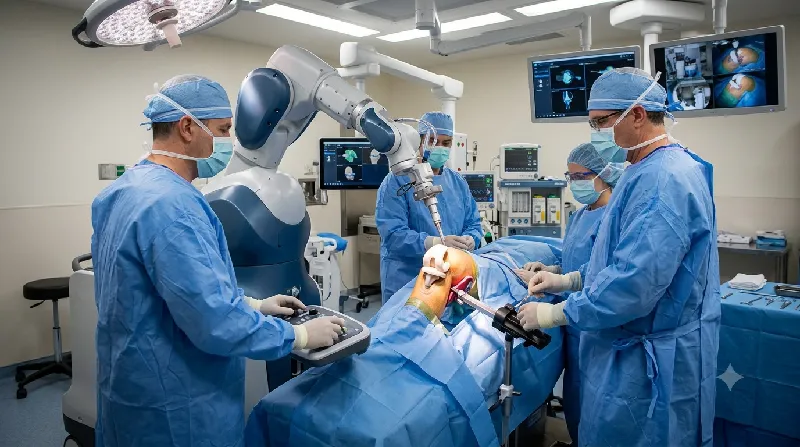
The procedure merged an active robot that guides the surgeon with a ceramic knee implant.
Ceramic implants are non‑metallic and can reduce wear compared to traditional metal parts.
Robotic assistance allows sub‑millimetre precision, helping place the implant exactly where needed.
Improved accuracy can lead to more consistent outcomes and longer implant life.
Doctors see this as a step toward the next generation of joint replacement techniques.
The active robotic system provided sub‑millimetre accuracy, improving bone preparation and implant positioning.
This combination of advanced materials and robotics may shape future joint replacement surgeries.
Want to learn even more? Click here to read the full story!