← Back
Article image
πŸ“° News ⏱ 2 min
πŸ”‘

Key Points

5 points
1

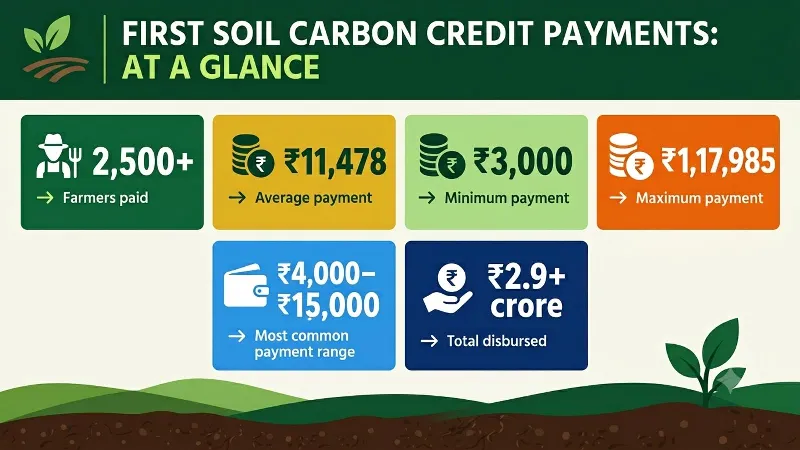
Each farmer earned between ₹3,000 and ₹15,000 based on the carbon credits generated.

2

The program verified greenhouse‑gas reductions through scientific testing and satellite data.

3

It helped save an estimated 45 billion litres of water and kept over 200,000 tonnes of crop residue from being burned.

4

Payments are made through Direct Benefit Transfer, a digital system that sends money straight to bank accounts.

5

The initiative supports India's broader shift toward regenerative agriculture and aligns with international climate collaborations.

πŸ“–

Summary

Over 2,500 smallholders in Punjab and Haryana have received about 2.9 crore rupees for increasing soil carbon.

Key techniques include Direct Seeded Rice, reduced tillage, and crop‑residue management, which lower water use and prevent burning.

The scheme links measured carbon reductions to carbon credits, providing an economic incentive for sustainable agriculture.

πŸ“˜

New Words to Learn

7 words
Regenerative agriculture
Farming methods that restore soil health, increase biodiversity, and capture carbon.
Soil carbon
Carbon stored in the ground, which helps keep the atmosphere cleaner.
Greenhouse‑gas reductions
Lowering gases that trap heat in the atmosphere.
Carbon credits
Tradeable certificates that represent a verified amount of carbon kept out of the air.
Direct Benefit Transfer
A government system that transfers funds directly to beneficiaries' bank accounts.
Satellite and remote‑sensing
Using orbiting devices to collect data about the land without being on the ground.
Crop residue
Plant parts left in the field after harvest, such as stalks and leaves.
πŸ”— Read Full Article β†’

Want to learn even more? Click here to read the full story!

πŸ”Š Reading Article
Kid-friendly voice
πŸ†

New Badge Unlocked!

Badge Name
Badge description