← Back
Article image
πŸ“° News ⏱ 2 min
πŸ”‘

Key Points

6 points
1

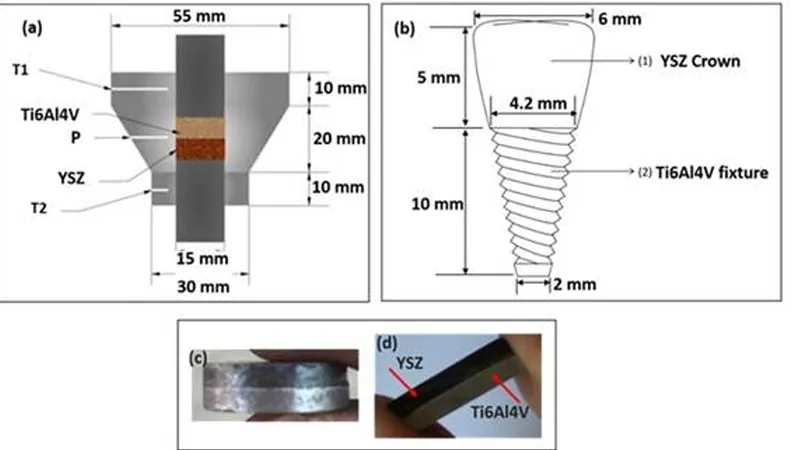
Bi‑layered design combines metal alloy and ceramic in one piece.

2

Manufactured by spark plasma sintering, a high‑temperature, high‑pressure process.

3

Achieves very high density with no internal defects.

4

Hardness up to 1,350 on the Vickers scale; compressive strength about 1,550 MPa; flexural strength around 310 MPa.

5

In vitro tests show over 90 % cell activity and negligible hemolysis, indicating strong biocompatibility.

6

Potential to reduce dental surgeries from multiple steps to a single procedure.

πŸ“–

Summary

The lower layer of the implant, made from the titanium alloy, acts as the load‑bearing fixture that integrates with the jawbone, while the upper layer of zirconium dioxide forms the crown that mimics natural tooth appearance.

Using spark plasma sintering, the two materials are fused together in one step, achieving a density of 99.5 % with no cracks or gaps at the interface.

Mechanical testing showed hardness and strength comparable to or better than current market implants, and laboratory cell tests confirmed the material is non‑toxic and does not damage red blood cells.

Because the design eliminates separate components, it could reduce the typical two‑ or three‑step surgical process to a single operation, making dental treatment faster and less uncomfortable.

πŸ“˜

New Words to Learn

11 words
bi‑layered
having two different material layers stacked together
titanium‑aluminum‑vanadium alloy
a strong metal mix that includes titanium, aluminum and vanadium
zirconium dioxide
a white ceramic material often used for its tooth‑like appearance
spark plasma sintering
a technique that uses rapid heating with electric current to fuse powdered materials into a solid piece
density of 99.5 %
almost completely solid with very few tiny empty spaces
hardness (Vickers scale)
a measure of how resistant a material is to being scratched or dented
compressive strength
how much pressure a material can withstand before it crushes
flexural strength
how much bending force a material can take before it breaks
in vitro
tests done in a lab dish rather than in a living person
non‑toxic
does not harm cells or tissues
hemolysis
the breaking of red blood cells, which the implant did not cause
πŸ”— Read Full Article β†’

Want to learn even more? Click here to read the full story!

πŸ”Š Reading Article
Kid-friendly voice
πŸ†

New Badge Unlocked!

Badge Name
Badge description