Summary
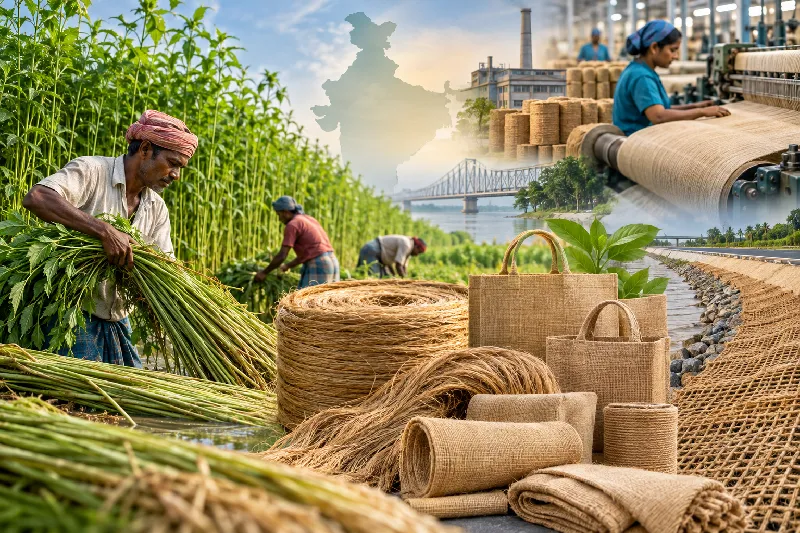
India accounts for about 75 % of global jute production, providing livelihoods to around four million farm families and hundreds of thousands of mill workers.
The government sets a Minimum Support Price of 5,925 Indian rupees per quintal to ensure farmers receive a fair income and uses programmes like the National Jute Development Programme to promote modern cultivation methods.
Digital tools such as the Jute Smart portal and satellite‑based monitoring systems help track crop health and streamline procurement.
Beyond traditional sacks, jute is being turned into eco‑friendly building materials, technical textiles, and sports apparel, positioning it as a sustainable alternative to plastic.