← Back
Article image
πŸ“° News ⏱ 2 min
πŸ”‘

Key Points

6 points
1

15.8 million recharge structures built by Sep 2026.

2

Phase 1 (by May 2025) added 2.7 million; Phase 2 (by May 2026) added the rest.

3

Three guiding principles: Community, Corporate Social Responsibility, Cost.

4

Groundwater levels increased 3‑4 metres in several villages.

5

Rooftop rain‑water harvesting introduced in educational and government buildings.

6

Project integrated with the Jal Shakti Campaign: Catch the Rain.

πŸ“–

Summary

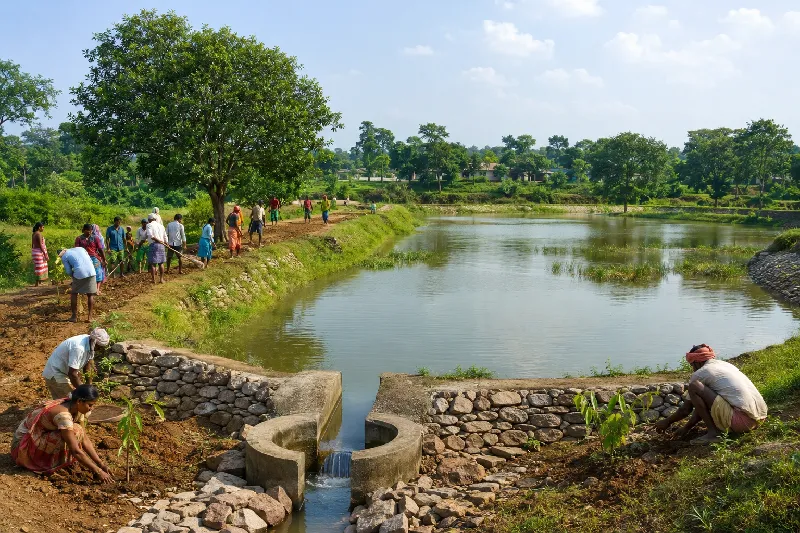
By September 2026, more than 1.58 crore (15.8 million) artificial recharge structures—such as ponds, soak pits, and rain‑water harvesting systems—have been constructed nationwide.

The initiative follows the 3 Cs: Community participation, Corporate Social Responsibility, and Cost‑effectiveness, and operates under a whole‑government, whole‑society approach.

Success stories include Chhattisgarh farmers allocating land for recharge ponds that raised groundwater levels by up to four metres, and Andhra Pradesh villages creating over 200 structures that stored millions of cubic metres of water.

In Odisha, rooftop rain‑water harvesting and recharge shafts have been installed in schools, colleges, and government offices, improving post‑monsoon groundwater recovery.

πŸ“˜

New Words to Learn

7 words
groundwater
water that fills the spaces underground
recharge
to add more water back into the underground supply
hydrogeological
relating to how water moves and is stored under the earth
aquifer
a large underground layer that holds water
corporate social responsibility
when businesses help improve the community
micro‑watershed mapping
small‑area study to see where rainwater can be collected
panchayat
local village council that makes decisions for the community
πŸ”— Read Full Article β†’

Want to learn even more? Click here to read the full story!

πŸ”Š Reading Article
Kid-friendly voice
πŸ†

New Badge Unlocked!

Badge Name
Badge description