← Back
Article image
πŸ“° News ⏱ 2 min
πŸ”‘

Key Points

5 points
1

Stage one uses natural uranium in Pressurised Heavy Water Reactors to produce electricity.

2

Stage two uses fast breeder reactors to create more fuel and produce uranium‑233 from thorium.

3

Stage three will rely on thorium‑based reactors that use uranium‑233 for power.

4

India’s abundant thorium reserves are found in coastal sands of several states.

5

A closed fuel cycle reduces waste by re‑processing used fuel and safely storing remaining waste.

πŸ“–

Summary

The Prototype Fast Breeder Reactor at Kalpakkam achieved first criticality in April 2026, marking progress in the second stage.

Currently 24 reactors generate 8.78 gigawatts; nine more are under construction and ten new Pressurised Heavy Water Reactors have been approved.

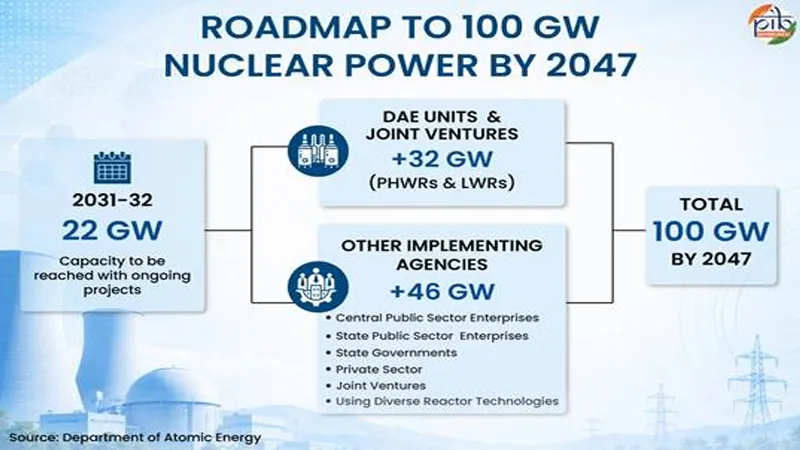
The Nuclear Energy Mission and the Sustainable Harnessing and Advancement of Nuclear Energy (SHANTI) Act aim to boost domestic manufacturing, private‑sector participation, and reach 100 gigawatts of nuclear capacity by 2047.

The plan also includes Small Modular Reactors and a closed fuel cycle that recycles spent fuel and uses vitrification to turn high‑level waste into stable glass.

πŸ“˜

New Words to Learn

6 words
criticality
the point when a reactor’s chain reaction becomes steady and can produce power
heavy water
water that contains a special kind of hydrogen, used to slow down atoms in some reactors
fast breeder reactor
a reactor that creates more usable fuel than it consumes
thorium‑233
a type of fuel made from thorium that can keep a reactor running
closed fuel cycle
a system where used fuel is cleaned and reused instead of being thrown away
vitrification
the process of turning liquid waste into solid glass for safe storage
πŸ”— Read Full Article β†’

Want to learn even more? Click here to read the full story!

πŸ”Š Reading Article
Kid-friendly voice
πŸ†

New Badge Unlocked!

Badge Name
Badge description