← Back
Article image
πŸ“° News ⏱ 2 min
πŸ”‘

Key Points

5 points
1

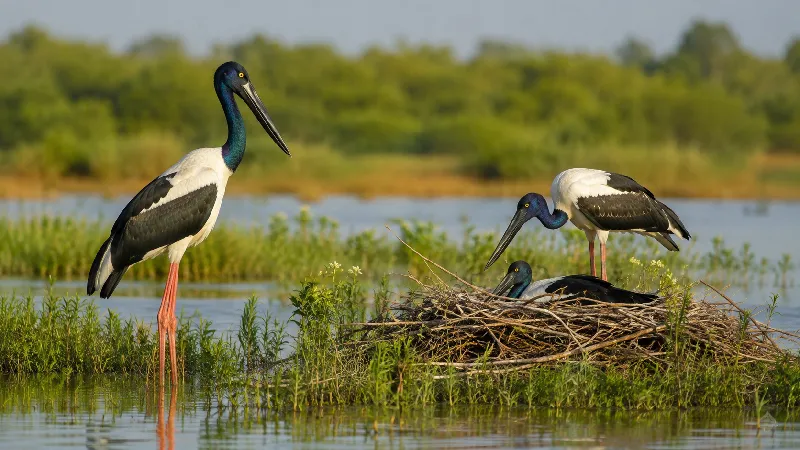
Four active Black‑Necked Stork nests monitored; eight fledglings produced.

2

Nests located on Neltuma juliflora trees 3‑4.5 m high near shallow wetlands.

3

Parents exhibited coordinated biparental care, average 62 minutes per nest visit.

4

100 % fledging success; no predation or chick deaths recorded.

5

Key habitat factors: shallow water, emergent vegetation, low human disturbance.

πŸ“–

Summary

During a study from July 2024 to March 2025, four active nests were observed, each producing two fledglings, resulting in a 100 % fledging success rate.

The nests were built on Neltuma juliflora trees about three to 4.5 metres high, close to shallow water (0.3‑0.7 metres deep) with abundant fish, amphibians, and crustaceans for food.

Adult storks showed strong biparental care, spending an average of 62 minutes per visit at the nest and swapping roles in 94 % of foraging trips.

No nest abandonment, predation, or chick mortality was recorded, highlighting the sanctuary’s stable hydrology, low disturbance, and suitable habitat features as key to successful breeding.

Officials praised the research, noting that protecting these habitat conditions will support the species’ future in the region.

πŸ“˜

New Words to Learn

8 words
breeding
the period when birds lay eggs and raise their young
fledglings
young birds that have developed enough to leave the nest
wetland
an area of land saturated with water, such as a marsh or swamp
habitat
the natural environment where a species lives and finds food
invasive
a non‑native species that spreads quickly and can change ecosystems
predation
the act of one animal hunting or eating another
biparental
involving both the mother and father in caring for offspring
hydrological
relating to the movement and distribution of water
πŸ”— Read Full Article β†’

Want to learn even more? Click here to read the full story!

πŸ”Š Reading Article
Kid-friendly voice
πŸ†

New Badge Unlocked!

Badge Name
Badge description