← Back
Article image
πŸ“° News ⏱ 2 min
πŸ”‘

Key Points

5 points
1

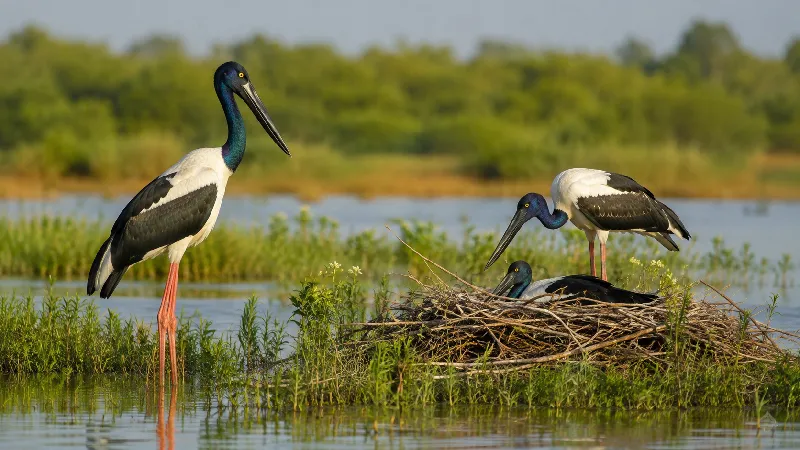
Four active stork nests were monitored.

2

Each nest produced two fledglings, total eight.

3

Nests were on trees about 3‑4.5 m high near shallow water.

4

Parents spent about an hour at the nest each visit and swapped duties.

5

No nests were abandoned or attacked during the study.

πŸ“–

Summary

Researchers counted four active nests and saw eight baby storks grow, giving a 100 % success rate.

The birds chose trees that were about three to four and a half metres high near shallow water that is 0.3‑0.7 metres deep.

The calm water, plenty of fish and frogs, and low human disturbance helped the parents take care of their eggs and chicks.

Scientists say keeping these conditions will help the storks keep breeding here.

πŸ“˜

New Words to Learn

7 words
breeding
the process of laying eggs and raising baby birds
fledglings
young birds that have just left the nest
wetland
land that is often wet, like a marsh or swamp
habitat
the natural home where an animal lives
invasive
a plant that spreads quickly and is not originally from the area
predation
when an animal is hunted or eaten by another
biparental
both parents taking care of the babies
πŸ”— Read Full Article β†’

Want to learn even more? Click here to read the full story!

πŸ”Š Reading Article
Kid-friendly voice
πŸ†

New Badge Unlocked!

Badge Name
Badge description