← Back
Article image
πŸ“° News ⏱ 2 min
πŸ”‘

Key Points

5 points
1

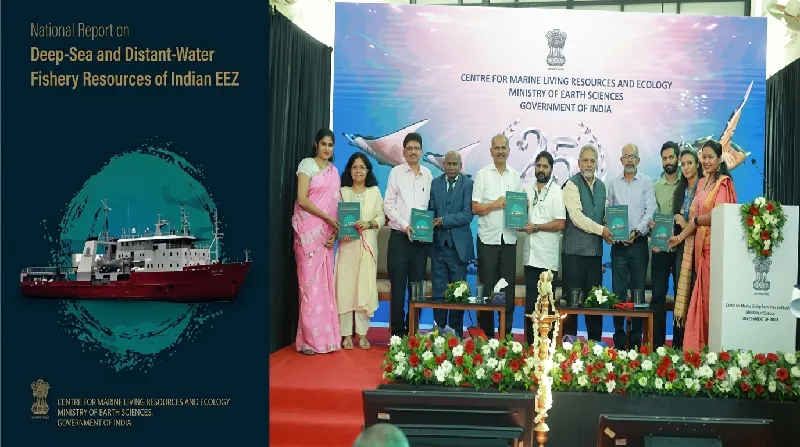
Summarizes four decades of ocean research across the Indian Exclusive Economic Zone.

2

Assesses mesopelagic (200‑1,000 m) and demersal resources beyond 200 m depth.

3

Identifies ecologically important areas including Kollam Bank, Angria Bank, and waters around Lakshadweep and the Andaman islands.

4

Highlights modern technologies—acoustics, environmental DNA, autonomous vehicles, satellites, artificial intelligence, ecosystem modelling—for marine spatial planning.

5

Aligns with India’s Blue Economy strategy and United Nations Sustainable Development Goal fourteen.

πŸ“–

Summary

The document reviews species such as lanternfish, deep‑sea shrimp, tunas, and Antarctic krill, and identifies key biodiversity hotspots.

It explains how tools like acoustic surveys, environmental DNA, autonomous platforms, satellite observations and artificial intelligence support sustainable ocean management.

The findings support India’s Vision for 2047 and the United Nations Sustainable Development Goal fourteen to protect marine life.

πŸ“˜

New Words to Learn

12 words
Exclusive Economic Zone
The part of the ocean that a country controls for fishing and resources.
mesopelagic
A deep layer of the ocean, about 200 to 1,000 metres down, where little sunlight reaches.
biodiversity
All the different kinds of living things in an area.
sustainable
Using resources in a way that does not run out and keeps the environment healthy.
ecosystem
A group of living things and their surroundings that interact as a system.
acoustic surveys
Using sound waves to detect and count fish and other sea creatures.
environmental DNA
Small pieces of genetic material left in water that tell scientists what species are present.
autonomous platforms
Self‑operating robots or devices that travel in the ocean to collect data.
artificial intelligence
Computer systems that can learn from data and help make decisions.
ecosystem modelling
Computer simulations that show how different parts of the ocean work together.
marine spatial planning
Organising how different parts of the sea are used for fishing, protection, and other activities.
Blue Economy
Using ocean resources for economic growth while protecting the marine environment.
πŸ”— Read Full Article β†’

Want to learn even more? Click here to read the full story!

πŸ”Š Reading Article
Kid-friendly voice
πŸ†

New Badge Unlocked!

Badge Name
Badge description