← Back
Article image
πŸ“° News ⏱ 2 min
πŸ”‘

Key Points

5 points
1

Earth’s crust is divided into huge tectonic plates that move and sometimes grind against each other

2

When stress builds up on a fault, it releases suddenly as an earthquake

3

Depth, distance from populated areas, local ground type, and building quality all affect the impact of an earthquake

4

The Pacific Ring of Fire accounts for most of the world’s largest quakes, but Venezuela lies outside this zone

5

Continued monitoring and stronger construction are the best ways to protect communities

πŸ“–

Summary

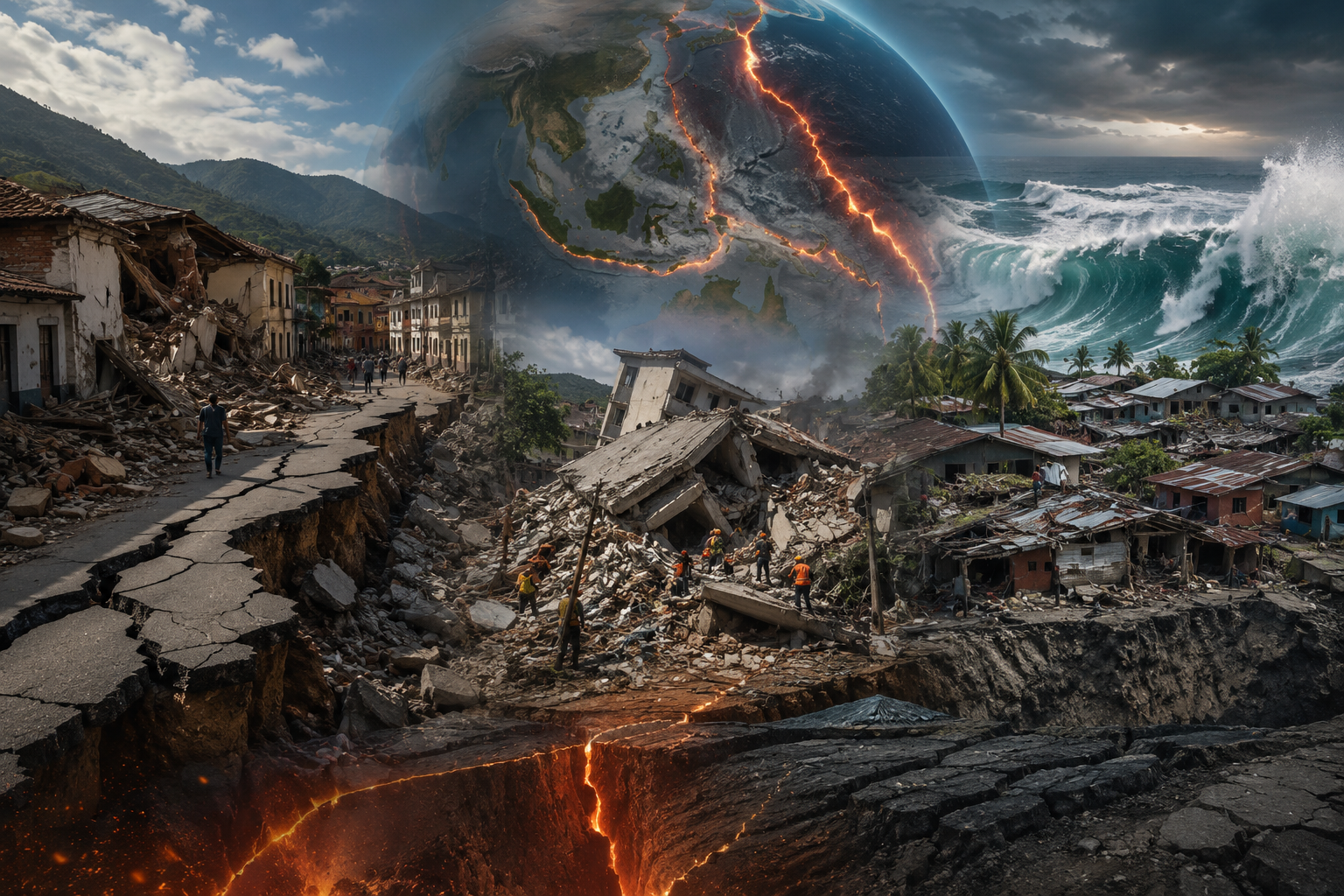
A magnitude‑7.4 earthquake occurred deep beneath western Colombia on 10 August, causing serious damage despite its depth

On 15 August, a magnitude‑7.7 earthquake struck shallowly near Flores Island, Indonesia, triggering landslides and a brief tsunami alert

Scientists explain that these events happened on different fault systems and are not part of a single global pattern

πŸ“˜

New Words to Learn

6 words
magnitude
a measurement of the energy released by an earthquake, usually expressed on a numeric scale
tectonic plates
large sections of the Earth’s outer shell that move very slowly over the mantle
fault
a fracture in the Earth’s crust where blocks of rock move relative to each other
Pacific Ring of Fire
a belt of frequent earthquakes and volcanic activity that encircles the Pacific Ocean
aftershocks
smaller earthquakes that follow the main event as the crust adjusts
preparedness
the actions taken beforehand, such as building codes and emergency plans, to reduce harm during a disaster
πŸ”— Read Full Article β†’

Want to learn even more? Click here to read the full story!

πŸ”Š Reading Article
Kid-friendly voice
πŸ†

New Badge Unlocked!

Badge Name
Badge description