← Back
Article image
πŸ“° News ⏱ 2 min
πŸ”‘

Key Points

5 points
1

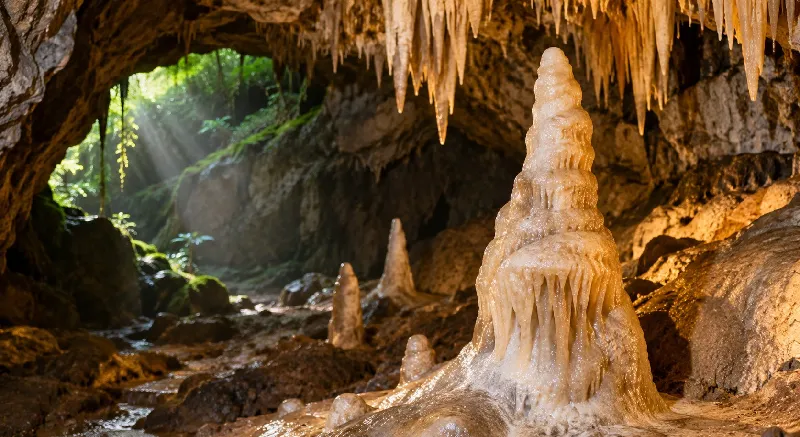
Stalagmite length: about 11 centimeters, grown over thousands of years.

2

Scientists measured oxygen isotopes to tell how much rain fell.

3

Early Holocene (about 11,800‑7,700 years ago) had very strong monsoon rains.

4

Later period (7,700‑5,600 years ago) showed a gradual weakening of the monsoon.

5

Findings link Indian rain to global climate systems such as solar cycles and ocean currents.

πŸ“–

Summary

The stalagmite kept a record of rain for about 6,000 years.

Analysis showed the Indian summer monsoon was strongest early on and then got weaker.

Changes matched big climate events far away, like those in the Atlantic Ocean.

Sun activity and ocean patterns also helped shape the monsoon.

πŸ“˜

New Words to Learn

5 words
stalagmite
A rock that forms on the floor of a cave from mineral‑rich water droplets.
isotope
A version of an element that scientists can track to learn about past conditions.
oxygen isotope
A type of oxygen atom used as a clue to how much rain fell in the past.
Holocene
The current geological age that began after the last Ice Age, about 11,700 years ago.
solar cycle
Regular changes in the Sun’s activity that happen over many years.
πŸ”— Read Full Article β†’

Want to learn even more? Click here to read the full story!

πŸ”Š Reading Article
Kid-friendly voice
πŸ†

New Badge Unlocked!

Badge Name
Badge description