← Back
Article image
πŸ“° News ⏱ 2 min
πŸ”‘

Key Points

5 points
1

Target: 500 gigawatts of non‑fossil electricity capacity by 2030.

2

Existing pumped storage capacity: about 7 gigawatts operating, about 16 gigawatts under construction.

3

Projected total pumped storage capacity by 2032: roughly 105 gigawatts.

4

Main regions with potential: Western Ghats, Maharashtra, Gujarat, and several southern states.

5

Government measures include tariff‑based competitive bidding, transmission charge waivers, and faster project approvals.

πŸ“–

Summary

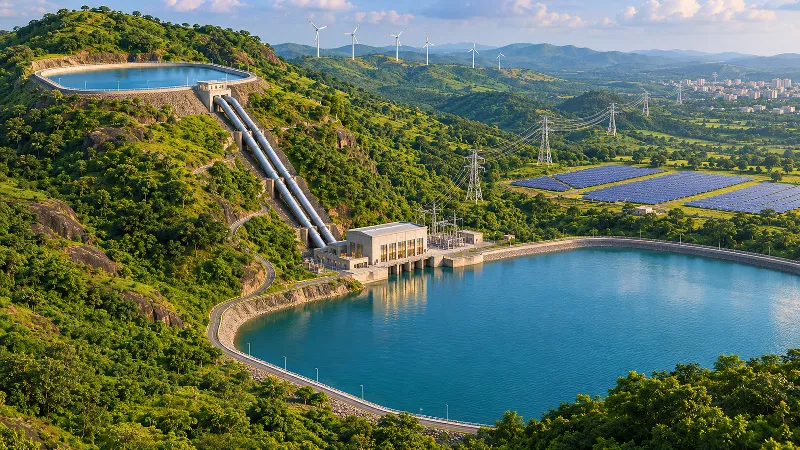
Pumped storage hydropower uses two reservoirs at different elevations; excess electricity powers pumps that lift water to the upper reservoir.

When demand peaks, the stored water is released downhill, turning turbines that generate electricity for the grid.

The technology can store gigawatts of power for many hours, complementing faster‑acting battery systems.

India currently operates about 7 gigawatts of pumped storage and aims to expand to over 100 gigawatts by the early 2030s, supported by government policies and financial incentives.

πŸ“˜

New Words to Learn

8 words
non‑fossil
energy that does not come from coal, oil, or gas
gigawatt
a very large amount of power, enough for many thousands of homes
grid
the system of power lines that moves electricity to where it is needed
tariff
the price set for selling electricity
bidding
the process where companies compete by offering the best price
transmission
moving electricity over long distances through big power lines
environmental appraisal
a study that looks at how a project might affect nature
seismicity
how likely an area is to have earthquakes
πŸ”— Read Full Article β†’

Want to learn even more? Click here to read the full story!

πŸ”Š Reading Article
Kid-friendly voice
πŸ†

New Badge Unlocked!

Badge Name
Badge description