← Back
Article image
πŸ“° News ⏱ 2 min
πŸ”‘

Key Points

5 points
1

Launch scheduled for 11:51 pm Friday.

2

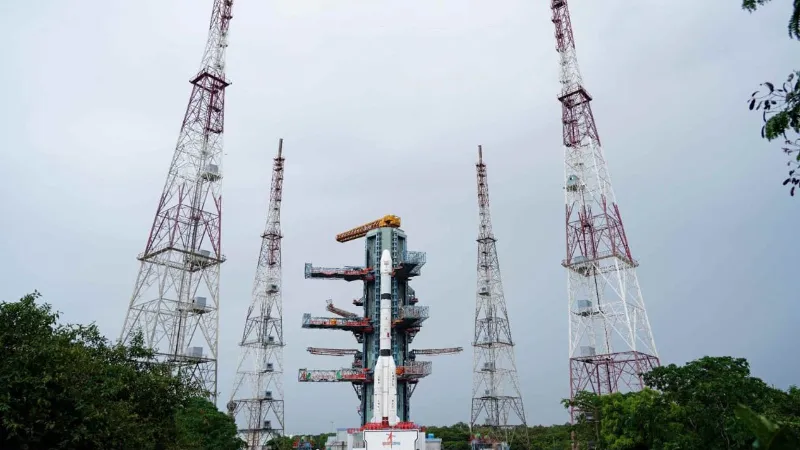
Rocket: Geosynchronous Satellite Launch Vehicle – Flight 18.

3

Satellite mass: 2,232 kg; carries rubidium atomic clock.

4

Orbit: initially 170 km perigee to 37,023 km apogee, then final geosynchronous slot.

5

Goal: improve regional navigation services for India.

πŸ“–

Summary

The 50‑metre, three‑stage rocket will lift off from the second launch pad at the Satish Dhawan Space Centre in Sriharikota.

For this flight, engineers kept the satellite’s pyrotechnic valves open to bypass the connector failure that halted the previous NVS‑02 mission.

NVS‑03, weighing 2,232 kg, includes an Indian‑made rubidium atomic clock and will broadcast signals in L1, L5 and S bands for smartphones and wearables.

After reaching a geosynchronous transfer orbit, the satellite will raise its orbit to a final geosynchronous slot, enhancing the NavIC positioning network.

πŸ“˜

New Words to Learn

8 words
Geosynchronous Satellite Launch Vehicle
A large rocket designed to place satellites into an orbit that stays over the same region of Earth.
perigee
The point in an orbit closest to Earth.
apogee
The point in an orbit farthest from Earth.
inclination
The tilt of the satellite’s orbit compared to Earth’s equator.
pyrotechnic valves
Valves that open using a small controlled explosion to allow fuel flow during launch.
redundancy
Having extra backup systems in case one part fails.
rubidium atomic clock
A highly precise time‑keeping device that uses the element rubidium.
NavIC
India’s regional navigation system, similar to GPS, that helps devices find their location.
πŸ”— Read Full Article β†’

Want to learn even more? Click here to read the full story!

πŸ”Š Reading Article
Kid-friendly voice
πŸ†

New Badge Unlocked!

Badge Name
Badge description