← Back
Article image
πŸ“° News ⏱ 2 min
πŸ”‘

Key Points

5 points
1

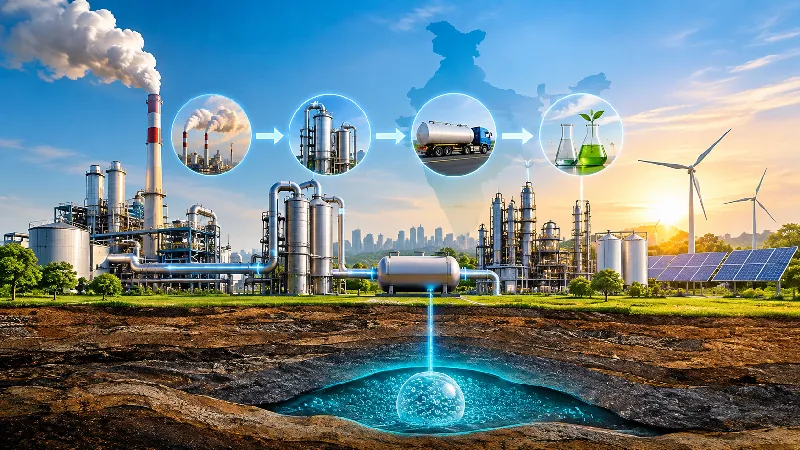
Carbon Capture, Utilisation and Storage consists of capture, compression, transport, and utilisation or permanent underground storage.

2

Utilisation pathways transform carbon dioxide into concrete, urea fertilizer, green methanol, or blue hydrogen.

3

Permanent storage options involve depleted oil and gas reservoirs, deep saline aquifers, and basalt rock formations.

4

India’s budget has allocated twenty thousand crore rupees over five years to support the technology in five major sectors.

5

Success depends on reliable technology, safe storage sites, and economic viability.

πŸ“–

Summary

The technology captures carbon dioxide at its source, transports it via pipelines or ships, and either converts it into useful products or stores it permanently in geological formations.

Key industrial targets include steel, cement, chemicals, and refineries, with several pilot projects already operating.

Government initiatives such as the national research roadmap and multi‑billion‑rupee funding aim to scale up the technology by 2030.

πŸ“˜

New Words to Learn

10 words
industrial
relating to factories and large‑scale production
emissions
gases released into the air from factories or vehicles
carbon dioxide
a greenhouse gas that can warm the planet
geological
connected to the earth’s rocks and underground layers
utilisation
the act of using something for a useful purpose
hydrogen
a light gas that can be used as a clean fuel
blue hydrogen
hydrogen made from fossil fuels with carbon capture applied
green hydrogen
hydrogen made using electricity from renewable sources
electrolysis
a process that splits water into hydrogen and oxygen using electricity
basalt
a hard, dark volcanic rock used for long‑term carbon storage
πŸ”— Read Full Article β†’

Want to learn even more? Click here to read the full story!

πŸ”Š Reading Article
Kid-friendly voice
πŸ†

New Badge Unlocked!

Badge Name
Badge description