← Back
Article image
πŸ“° News ⏱ 2 min
πŸ”‘

Key Points

5 points
1

Dates: 21‑27 October 2026.

2

Originates from a 17th‑century tradition started by Raja Jagat Singh.

3

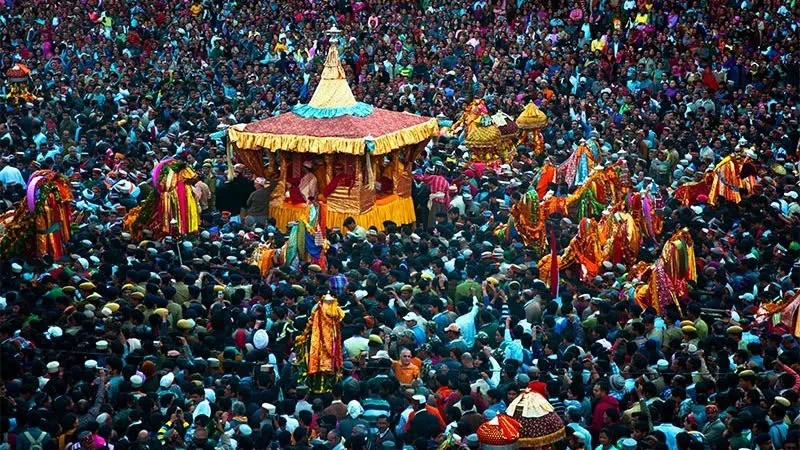
Features collective worship of Lord Raghunath and other village deities.

4

Includes a chariot procession, music, dance, and a handicraft bazaar.

5

Strengthens the local economy and cultural heritage.

πŸ“–

Summary

Central to the celebration is the procession of Lord Raghunath’s decorated wooden chariot, pulled by devotees while traditional music—including dhol, shehnai, and ransingha—fills the air.

The event also serves as a platform for folk arts such as Nati dances and provides a market for local artisans to sell woven shawls, caps, and other handicrafts.

Beyond tourism, the festival reinforces community identity, preserves cultural rituals, and passes traditions to younger generations.

πŸ“˜

New Words to Learn

16 words
deity
a god or special figure that people worship
palanquin
a covered seat carried on poles by people
procession
a group of people moving together in a formal order
oracle
a person believed to give messages from a god
circumambulation
walking around something in a circle as a sign of respect
chariot
a large wooden cart that is pulled by people
ritual
a set of traditional actions performed for a special purpose
folk
traditional music and dance from ordinary people
handicraft
items made by hand, such as woven shawls and caps
shehnai
a long wind instrument that makes a sweet sound
dhol
a deep‑sounding drum used in celebrations
nagara
a type of drum played in festivals
ransingha
a curved horn that produces a loud note
Raja
a king or ruler
bazaar
a market where goods are bought and sold
heritage
the traditions and culture passed down from earlier generations
πŸ”— Read Full Article β†’

Want to learn even more? Click here to read the full story!

πŸ”Š Reading Article
Kid-friendly voice
πŸ†

New Badge Unlocked!

Badge Name
Badge description