← Back
Article image
πŸ“° News ⏱ 2 min
πŸ”‘

Key Points

5 points
1

Launch scheduled for early 2024 using Japan's H three launch rocket.

2

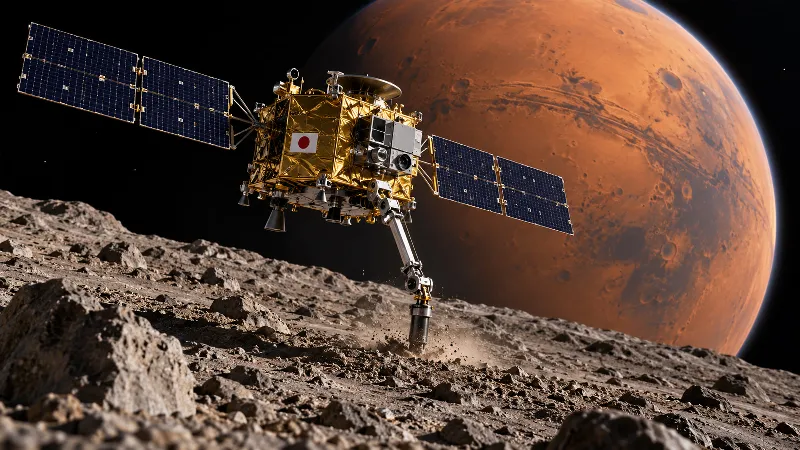
Travel time to the Mars region is about one year, followed by three years of orbiting and sampling Phobos.

3

The spacecraft consists of three modules: propulsion, exploration, and return, and weighs roughly five tons.

4

Sampling will be done with a pressurized‑gas device from the National Aeronautics and Space Administration and a coring tool from Japan's space agency.

5

Collected material will be stored in a heat‑shielded capsule that will survive reentry and land in Australia in 2031.

πŸ“–

Summary

The mission, called Martian Moons Exploration, aims to understand how Phobos and its sibling Deimos formed and to search for evidence of past life.

A French‑German rover will land on Phobos, drill into the surface, and collect at least ten grams of soil using two different sampling tools.

After three years of study, the spacecraft will return the sealed samples to Earth, where they will land in Australia for scientists to examine.

πŸ“˜

New Words to Learn

7 words
orbit
the curved path an object follows around a planet or star
sample
a small piece taken for scientific study
gravity
the force that pulls objects toward each other, keeping moons around planets
rover
a robotic vehicle designed to move across the surface of another world
mission
a planned journey with specific scientific goals
instrument
a tool used by scientists to measure or observe something
reentry
the phase when a spacecraft comes back into Earth's atmosphere from space
πŸ”— Read Full Article β†’

Want to learn even more? Click here to read the full story!

πŸ”Š Reading Article
Kid-friendly voice
πŸ†

New Badge Unlocked!

Badge Name
Badge description