← Back
Article image
πŸ“° News ⏱ 2 min
πŸ”‘

Key Points

5 points
1

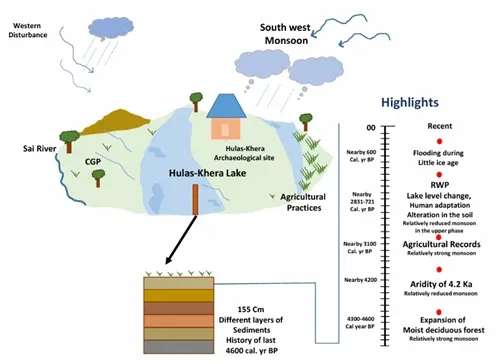
Scientists read lake sediments to track rain over 4,600 years.

2

Four major climate periods were identified, including a dry spell 4,200 years ago.

3

Monsoon changes altered lake size, plant types, and farming methods.

4

Ancient people used manure and different crops to adapt.

5

The research aids modern planning for water and food security.

πŸ“–

Summary

The study found four big climate periods, including a very dry time 4,200 years ago.

Changes in the Indian summer monsoon affected lake water levels, plants, and farming.

Early farmers adapted by adjusting their crops and using animal manure.

These ancient clues help scientists plan for future rain and food security. 🌦️

πŸ“˜

New Words to Learn

14 words
monsoon
a long rainy season that brings lots of rain
sediment
tiny bits of soil and sand that settle at the bottom of water
archaeological
related to studying old things people left behind
radiocarbon dating
a way scientists figure out how old something is by measuring tiny carbon atoms
isotopes
different forms of the same element that can tell scientists about the past
grain‑size analysis
checking how big or small the pieces of soil are
pollen
tiny dust from plants that can show what plants grew before
hydrology
the study of water and how it moves
vegetation
all the plants that grow in an area
C3 and C4 plants
two groups of plants that grow best in different kinds of weather
baseline
a starting point to compare new information
climate modelling
using computers to guess how weather might change
ecosystem
all the living things and their environment that work together
adaptation
changing how we do things to fit new conditions
πŸ”— Read Full Article β†’

Want to learn even more? Click here to read the full story!

πŸ”Š Reading Article
Kid-friendly voice
πŸ†

New Badge Unlocked!

Badge Name
Badge description