← Back
Article image
πŸ“° News ⏱ 2 min
πŸ”‘

Key Points

4 points
1

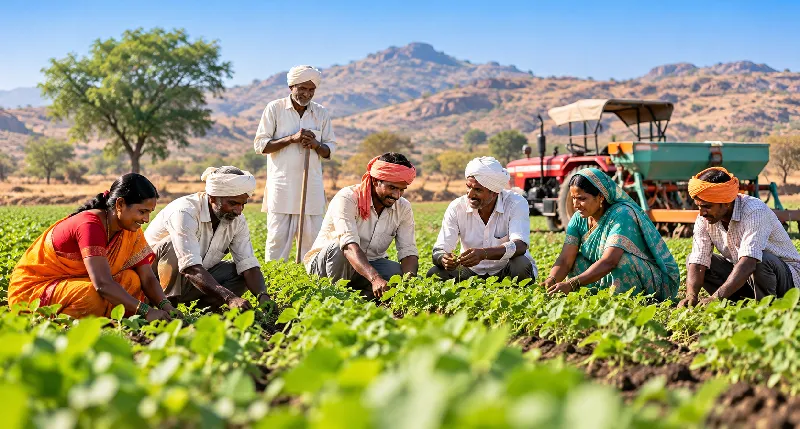
The farmers pooled resources and worked on each other's fields, cutting labour costs by roughly two lakh rupees.

2

They collectively bought seeds and hired tractor services, securing better prices.

3

Scientific techniques like seed treatment, suitable crop varieties, and the Broad Bed and Furrow method improved yields.

4

Water‑sharing arrangements helped protect crops during the drought‑prone season.

πŸ“–

Summary

Coordinated labour, shared seed purchases and modern planting methods saved about two hundred thousand rupees.

The group avoided borrowing from moneylenders and increased soybean production.

Training from the Paani Foundation introduced scientific practices such as raised‑bed planting and natural pest control.

πŸ“˜

New Words to Learn

17 words
collective farming
a system where many farmers work together on shared land and resources
drought
a prolonged period with insufficient rainfall affecting crops
agricultural labour costs
money paid for people to do farming work
moneylender
a person who gives loans, often at high interest, to borrowers
soybean
a legume grown for its edible beans and oil
quintal
a unit of weight equal to one hundred kilograms
Paani Foundation
an organization that teaches water‑saving and cooperative farming techniques
seed treatment
process of protecting seeds from disease before planting
crop varieties
different kinds of plants that are grown for food or other uses
raised beds
elevated planting areas that improve soil drainage and root growth
Broad Bed and Furrow method
a technique that creates wide planting beds with shallow channels for water distribution
natural pest management
using biological or ecological methods to control insects without chemicals
Dashparni Ark
a homemade spray made from local leaves and cow dung to deter pests
ATMA
Agriculture Technology Management Agency, a government body that supports farmers with technology and training
kharif season
the main monsoon‑dependent farming season in India, typically June to September
rabi season
the winter farming season in India, usually October to March
sustainable
practices that can be continued over time without harming the environment or depleting resources
πŸ”— Read Full Article β†’

Want to learn even more? Click here to read the full story!

πŸ”Š Reading Article
Kid-friendly voice
πŸ†

New Badge Unlocked!

Badge Name
Badge description